
Description
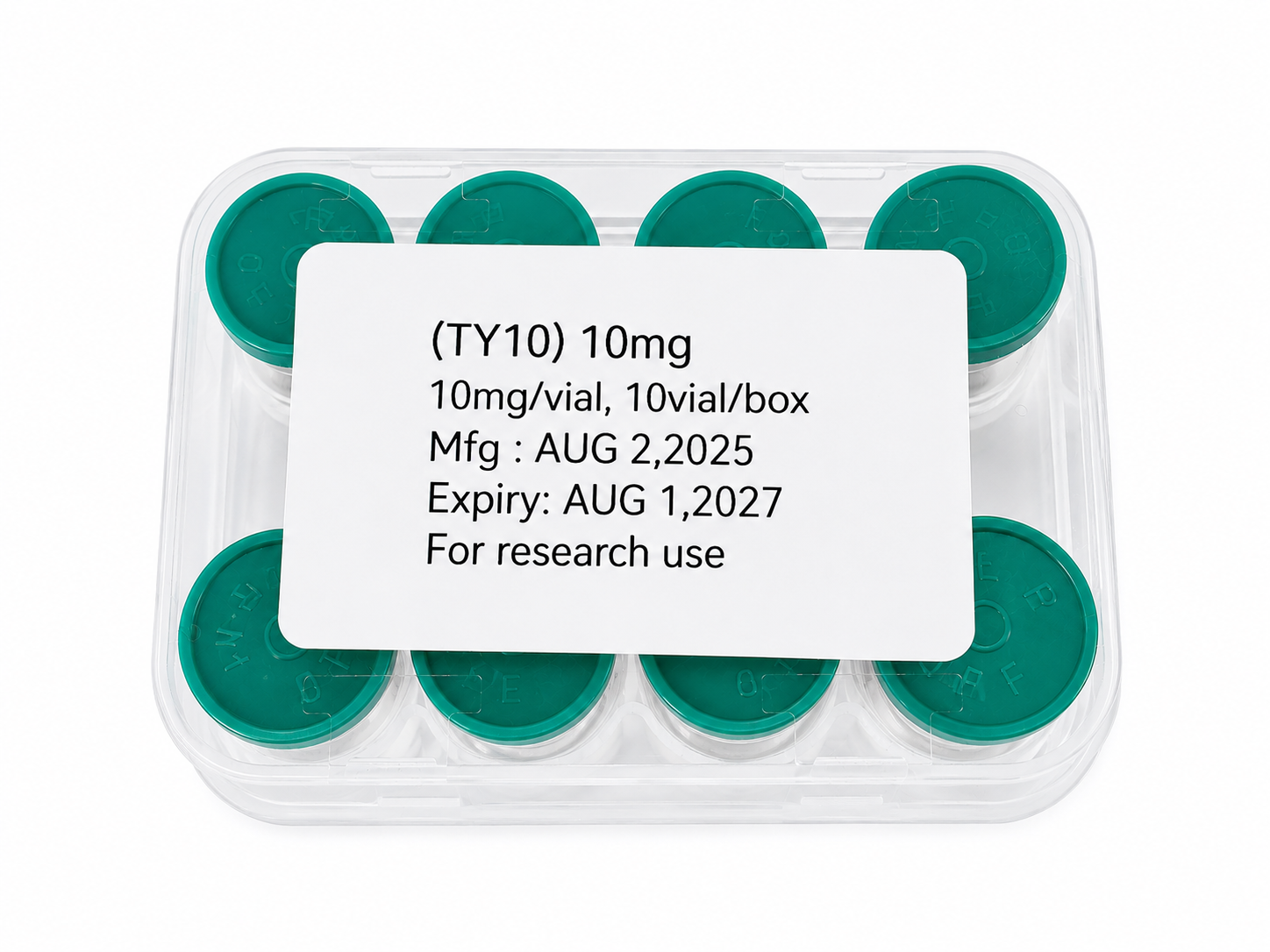
Thymalin 10mg (TY10) 10mg| High-Purity Research Peptide
Thymalin (TY10) 10mg is a high-quality research peptide studied extensively in the fields of immunology research, thymus biology, cellular communication, and peptide science. This naturally derived peptide complex has attracted scientific interest due to its relationship with thymic activity and immune system research.
Supplied as a 10mg lyophilized powder, Thymalin (TY10) 10mg is intended exclusively for laboratory and scientific research applications.
What Is Thymalin (TY10)?
Thymalin is a peptide-based compound originally associated with the thymus gland, an important organ involved in immune system development and regulation. Researchers study Thymalin to better understand the biological mechanisms of thymic peptides, immune signaling, and cellular interactions.
Scientific investigations involving Thymalin focus on understanding peptide functions, immune-related pathways, and molecular communication in controlled laboratory environments.
Thymalin (TY10) 10mg Specifications
| Specification | Details |
|---|---|
| Product Name | Thymalin (TY10) 10mg |
| Peptide Name | Thymalin |
| Quantity | 10mg |
| Category | Immunology Research Peptide |
| Form | Lyophilized Powder |
| Purity | High-Purity Research Grade |
| Application | Laboratory & Scientific Research Only |
| Storage | Store according to peptide storage guidelines |
Key Features of Thymalin (TY10) 10mg
- High-purity Thymalin research peptide
- Suitable for immunology and peptide research
- Lyophilized formulation for improved stability
- Designed for controlled laboratory studies
- Supports research involving thymic peptide biology
- Manufactured with research-quality standards
Research Applications
Immunology Research
Thymalin is commonly studied in laboratory research involving immune system signaling, peptide interactions, and cellular communication pathways.
Thymus Biology Studies
Researchers investigate Thymalin to better understand the role of thymus-derived peptides and their involvement in biological processes.
Cellular Signaling Research
Thymalin is used in experimental studies exploring peptide-mediated signaling and communication between cells.
Aging & Cellular Research
Scientists study thymic peptides as part of broader research into age-related biological changes and cellular regulation mechanisms.
Peptide Science
Thymalin provides researchers with a valuable tool for investigating peptide structures, biological interactions, and molecular pathways.
Why Choose Thymalin (TY10) 10mg?
Researchers select Thymalin 10mg because it offers:
- High-quality research-grade peptide material
- Reliable formulation for laboratory studies
- Suitable quantity for experimental protocols
- Professional packaging and quality control
- Support for immunology and cellular research
Storage & Handling
For maintaining peptide quality:
- Store in a cool, dry environment before use.
- Follow recommended peptide storage conditions.
- Protect from heat, moisture, and direct sunlight.
- Avoid unnecessary temperature changes.
- Use proper laboratory handling procedures.
Frequently Asked Questions
What is Thymalin?
Thymalin is a thymus-associated peptide compound studied in research involving immunology, thymic biology, and cellular signaling.
What is Thymalin (TY10) 10mg used for?
Thymalin is used for laboratory research involving immune-related pathways, peptide biology, and cellular communication studies.
Is Thymalin a research peptide?
Yes. Thymalin (TY10) 10mg is supplied as a research-grade peptide intended exclusively for scientific investigations.
Why choose the 10mg Thymalin format?
The 10mg presentation provides researchers with a convenient quantity suitable for controlled laboratory studies and peptide research applications.Thymalin 10mg (TY10) 10mg
Why Buy Thymalin (TY10) 10mg?
Thymalin (TY10) 10mg provides researchers with a reliable, high-quality peptide compound for investigations involving thymus biology, immunology, and cellular signaling. Its research-grade formulation makes it a valuable addition to peptide and molecular biology research programs.
.